
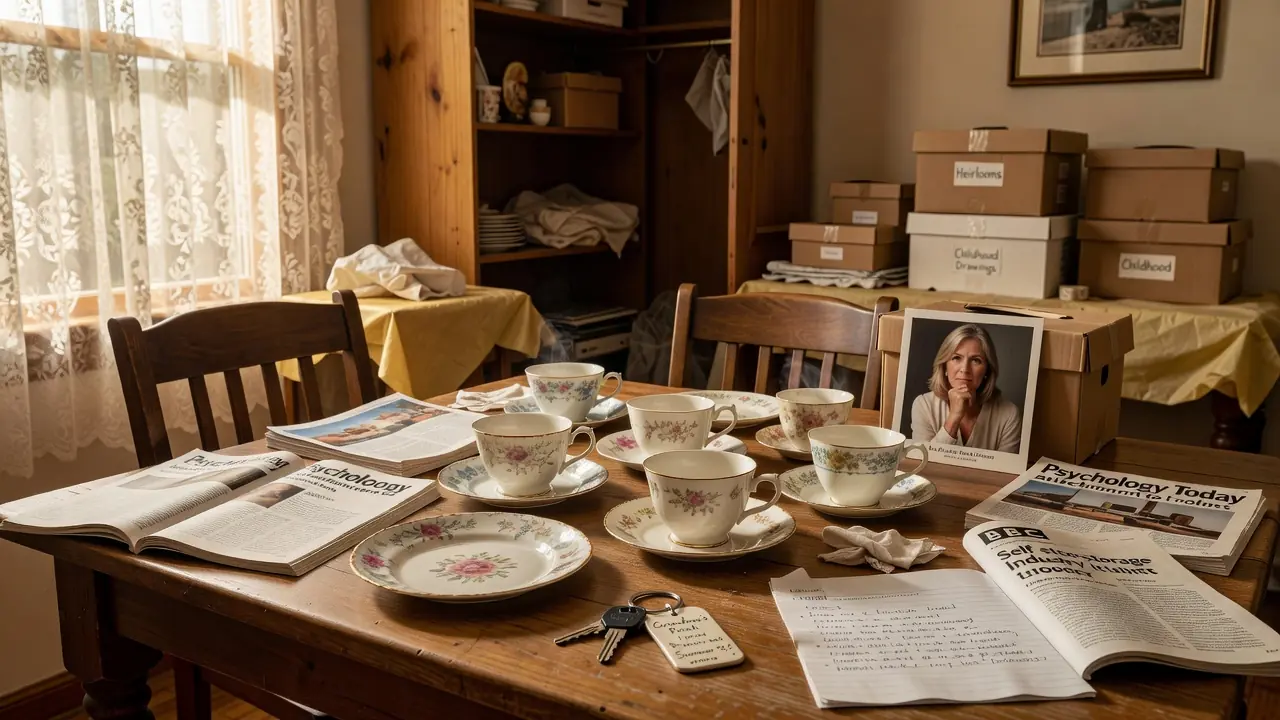
A new study led by Dan Grossman and colleagues suggests that the keepsakes we store away may matter less than the ones we handle every day. For households already struggling with clutter, the findings offer a practical alternative to packing heirlooms into boxes and closets.
What the research found
Published in the Journal of Consumer Psychology, the work set out to measure sentimental value and track how it changes over time. In one study, 214 university students decorated a keychain with words tied to a favorite memory, according to Psychology Today. One group set the keychain aside for about two weeks, while the other used it daily. Students who used it regularly reported a stronger connection to it, which suggests sentimental value can grow through contact rather than remain fixed.
Janina Steinmetz, Ph.D., writing in Psychology Today, summarized the researchers' explanation: use keeps memories coming to mind more often, reminds us why they matter, and reinforces how those memories relate to our sense of self.
Why clutter feels so heavy for many adults
The BBC reports that more than half of American adults feel overwhelmed by the amount of physical possessions they own. The Wall Street Journal describes a self-storage boom, with about a third of Americans reportedly needing a separate unit to hold belongings that do not fit at home.
Many people also carry objects they feel obligated to keep. Children's artwork, childhood items and inherited dining sets often stay in cabinets because they feel too precious to use. Professional declutterer Bev Hitchins told the BBC that accumulating possessions can be an attempt to fill an emotional gap, though that explanation comes from her professional view rather than from the new study.
Practical ways to apply the findings
- Use inherited china or glassware for ordinary meals or occasional gatherings where breakage is an acceptable risk.
- Keep the most meaningful items within easy reach. Southern Living suggests asking whether you can access something within 10 minutes; if not, its importance may be worth reconsidering.
- Choose a small group of true keepers and let go of duplicates or objects kept mainly out of guilt.
The study does not show that every object should be used, and some fragile or hazardous items may not suit daily handling. Still, the research supports a simpler approach: keep what you truly value, and let regular use strengthen the memories attached to it.