
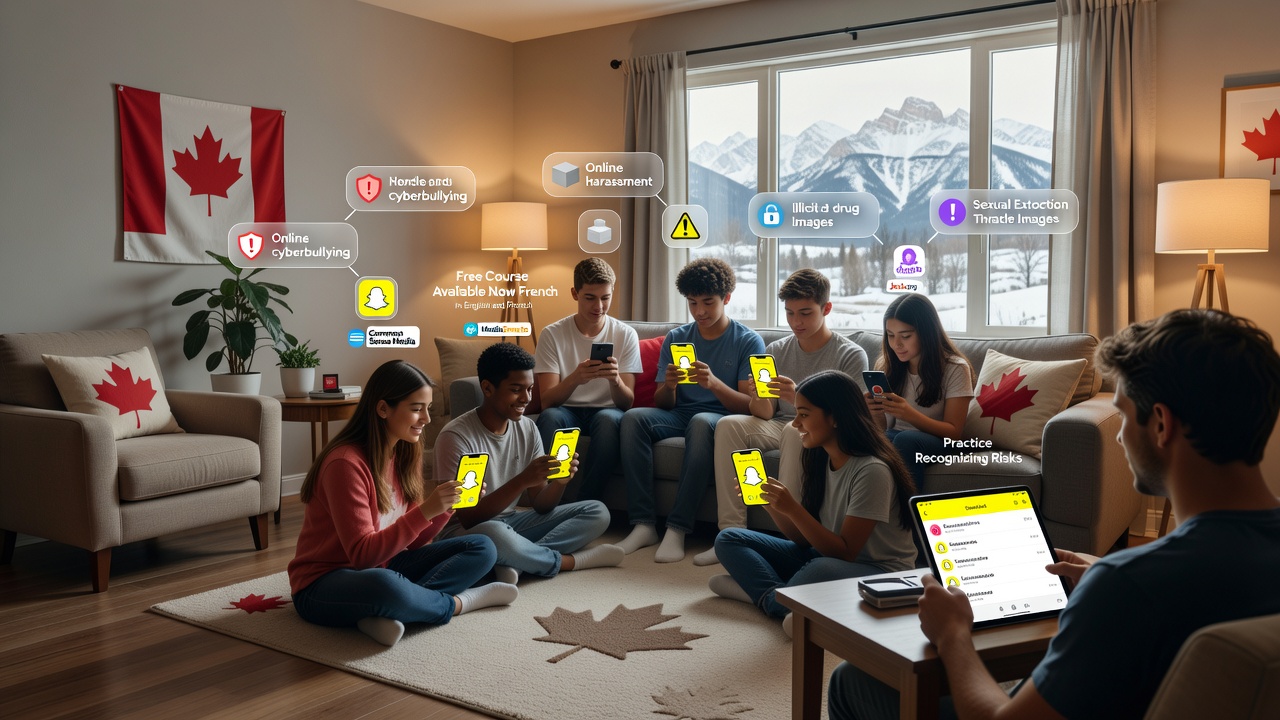
Snapchat has launched a free digital safety course for Canada called The Keys: A Guide to Digital Safety. The interactive program is available now in English and French through the company's Canadian website, and it requires no payment.
How the course is built
The Keys runs about 45 minutes and was developed with Common Sense Media, with input from the Canadian organizations MediaSmarts and Jack.org. Instead of only describing online dangers, it borrows from driver's education: instructional videos are paired with realistic scenarios that let teenagers practice how they would respond to a difficult situation. Snapchat says the topics include cyberbullying, harassment, illicit drug activity, intimate images and sexual extortion.
The course has two main sections. The first looks at risks across different online platforms. The second introduces Snapchat's safety settings, reporting tools and parental controls. Participants can finish in one sitting or come back later, and Snapchat recommends taking the course with a parent, teacher or other trusted adult.
Where it fits with existing tools
The launch builds on Snapchat's Family Center parental controls, which let parents see who their teenagers communicate with without viewing the content of private conversations. Snapchat presents the course as a complement to those controls, aimed at building judgment rather than only restricting access.
Why the company is focusing on Canada
The company timed the release to follow Canada's 21st annual Media Literacy Week and says it responds to growing concerns among Canadian families about online safety. The company cites MediaSmarts research indicating that about 32% of Canadians aged nine to 17 have experienced cyberbullying. Online sexual extortion has also drawn increasing attention from technology companies, and Meta has previously launched its own teen safety campaign. Canadian policymakers are also still examining stronger online protections for children.
What the course can and cannot do
Snapchat describes The Keys as a way to practice recognizing and responding to risky situations, and its program is designed around scenarios rather than statistics. The company has not published independent evaluation results showing how much the course changes teen behavior, so families should treat it as one resource alongside ongoing conversations at home and at school.